
Ya Mon, The Voice of Resilience
The Voice of Resilience

The Voice of Resilience
By Louis Leger
Every morning at 6:45 a.m., the man at Sandals South Coast brewing the large pot of Blue Mountain coffee offered a new shade of meaning for “ya mon.” The resort was closed to the public, but it became our home in Jamaica.
One morning I asked him what variation he had that day.
He smiled.
“Ya mon. It’s universal.”
From a distance, “ya mon” sounds casual. Decorative. Something printed on a souvenir shirt. Oh
Before Hurricane Melissa, my understanding of Jamaica was thin. A cruise terminal welcome centre. A few hours at Dunn’s River Falls with my kids. A beach vendor offering things with the same ease as bottled water. A movie about a bobsleigh team in Calgary. That was the extent of it.
Then a Category 5 storm hit on October 28th.
Roofs disappeared. Roads washed out. Forests stripped bare. Entire communities went dark. The damage wasn’t only physical. Business stalled. Tourism paused. An island economy absorbed a direct hit.
The first Jamaican I truly came to know was Ricardo.
There were no crews yet. No trucks. No visible deployment. Just conversations about whether and how we might help begin the rebuilding process.
We had no track record in Jamaica. No known reputation. Just our word.
Ricardo was professional, attentive, and observant. There was a natural distance at first. In moments like that, everyone is assessing everyone.
Over time, as discussions continued and he heard us speak about why we were there about responsibility, about helping start the rebuilding process that distance softened.
He was with us constantly in those early days listening, observing, weighing character more than promises.
One morning, before starting the vehicle, he paused. He said he and his wife had spoken the night before. He had told her we were good people, and he wanted us to know that.
It was a moment that carried more weight than he may have realized.
Trust, like restoration, begins before the trucks roll.
And everywhere “ya mon.”
Bright, with a wave we’re together.
Steady, with a nod understood.
Quick and confident it’s handled.
Soft, reflective that’s life.
Firm, direct “Ok. It’s enough.”
Two words. Context matters.
In rural villages far from any resort, other symbols revealed themselves.
Flowers on a table inside a 12x12 garage, where a mother and five children were living because their house had been destroyed. Shoes lined up neatly outside.
Children walking uneven country roads in pressed school uniforms, backpacks on. The roads were rough. Some potholes swallowed tires more than a hundred of ours over the deployment. You slow down. You carry spares. You adapt.
But school wasn’t cancelled. The future wasn’t postponed.
A woman in her seventies walked in 31°C heat for over an hour to reach church.
Hospital staff working in a building without a roof.
Farmers rebuilding herds. Small businesses reopening beside fallen trees.
None of it was performed.
It was reflex.
We locked our vehicles at night, as we would anywhere. Jamaica has its social and economic challenges, like any country. A hurricane doesn’t erase those realities.
But what stood out wasn’t disorder.
It was how often people walked toward the crews, not away to say, “Respect.” Sometimes, “First respect.”
Early on, it wasn’t clear why Jamaica Public Service wasn’t bringing in hundreds more foreign line workers at once. The instinct is simple: more people, faster restoration.
But large-scale recovery requires order. Roads must be cleared. Access secured. Materials staged. Circuits stabilized. You don’t introduce 300 foreign line workers into a damaged grid without structure that would create chaos, not speed.
JPS had a plan for a full Category 5 event. They followed it. The country needed stabilization before it could rebuild. When it was time to scale, materials were largely where they needed to be.
It was organized. It was deliberate.
Trusted local business leaders, especially members of the YPO network, helped us understand nuances we could not see from the outside, anticipate logistical pitfalls, and avoid mistakes good intentions alone can create. Over time, those relationships became trusted friendships.
The Canadian High Commission provided steady guidance throughout a quiet reminder that when Canadians show up abroad, we carry more than equipment.
The scale of grid destruction was unlike anything many line crews had seen. Entire circuits down. Poles snapped. Conductors wrapped through hillsides. In some areas, this wasn’t repair.
It was reconstruction.
Restoration isn’t only poles and wires. It’s logistics.
Every meal multiplied by 180.
Every bottle of water.
Every safety briefing at first light.
Every bed.
Every spare part.
Every tire.
Fuel deliveries that couldn’t miss.
Nine full-time mechanics who never stopped, because if the trucks don’t roll at sunrise, the grid doesn’t move.
At times it felt less like a deployment and more like moving a small city through damaged terrain, under heat and humidity that never relented.
And still, it was done methodically. Not rushed. Stabilize. Secure access. Stage materials. Then scale.
Because in conditions like that, speed without order creates chaos.
Order creates progress.
Not every day was hopeful.
The hardest day, there was a road accident. Four people died, including a 12-year-old girl. It was tragic. Crews did what they are trained to do. Some moments stay with you long after the work ends.
Recovery unfolds on real roads, in real communities, under real strain.
Over sixty-three days, 180 line workers, mechanics, and logistics personnel supported restoration efforts. Sixteen-hour days in heat and humidity that never relented. Thousands of poles set or reset. Thousands of kilometres of conductor strung. Nearly two hundred thousand labour hours were delivered.
The numbers matter. They represent homes lit again. Refrigerators humming. Businesses reopening. Schools functioning.
But numbers don’t capture what was visible across the island.
The child who said “Respect” before asking if the Gatorade was for his mother.
The flowers on the table.
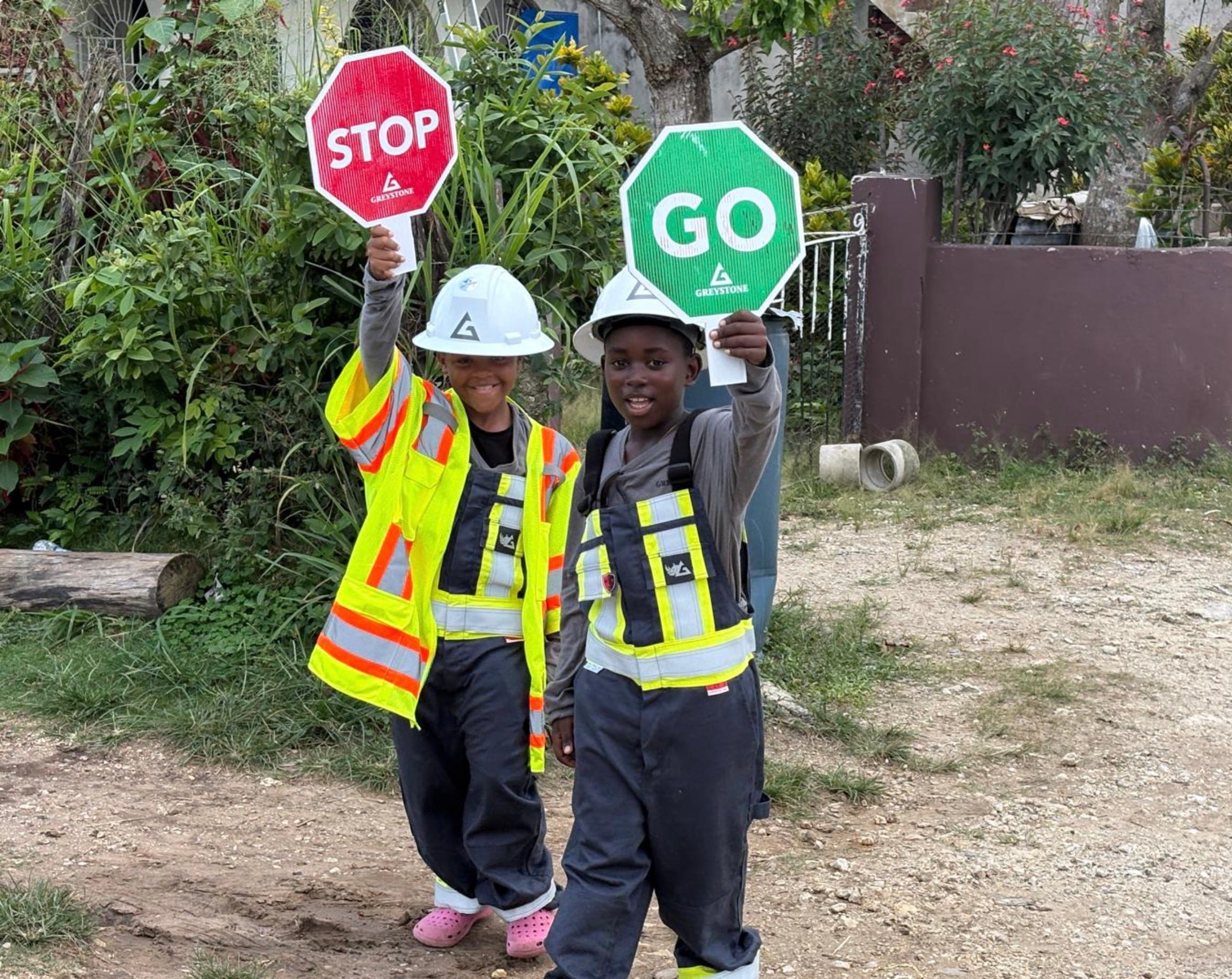
The uniforms on broken roads.
The quiet composure of people who did not wait for permission to move forward.
In recent years, Jamaica made measurable strides stabilizing public finances, strengthening accountability, and reducing crime. That progress was disciplined and hard-earned.
What was visible, again and again, was a country that had worked incredibly hard to elevate itself determined not to let an uncontrollable event of nature, regardless of its destructive force, push it off track.
The JPS leadership team demonstrated discipline and clarity under tremendous pressure. Their planning and sequencing made large-scale recovery possible.
A word of admiration for the Greystone logistics team, the line workers, and the mechanics who often worked longer hours than anyone. They carried extraordinary weight, quietly and professionally. In hard conditions, they showed up every morning and did the work with pride.
Sandals South Coast, where crews stayed while the island stabilized, is preparing to reopen in September another steady signal that the country is moving forward.
Power restoration is only the first step. The deeper rebuilding continues housing, roads, schools, and livelihoods.
Today, our deployment comes to an end.
Jamaica is a country to watch.
Ya mon.
-30-
Incredible story and told with passion and respect for Jamaica and its people. Greystone and the entire crew are incredible people and Louis just captured there story in this post. Well done.
As a Jamaican, thank you for capturing the resilience and spirit of our people so beautifully. You looked beyond the devastation and recognized the hope, strength, and determination that define us. Thank you Louis and your team for standing with Jamaica during a difficult time.